California Lease Agreement with ezSign
Create a California Lease Agreement with ezLandlordForms to simplify your rental process and protect your rental units. Designed for California landlords, our CA Lease Agreement complies with all California lease laws, including AB 12’s security deposit cap. For most landlords, California law caps security deposits to one month’s rent. Prepare, customize, and electronically sign your complete California Lease Package in minutes with ezLandlordForms.
Build & preview free - Create a Pro Account to download/ezSign
4.8 Stars from landlords & property managers
Document Features
Uses Lease Builder
State Compliant
ezSign
Download PDF
Takes less than 5 minutes
Takes less than 5 minutes
Related Documents
What Is a California Lease Agreement?
A California lease agreement is a legally binding contract between a landlord and tenant, outlining all terms and rules of a residential tenancy in California. A good lease includes basic terms like lease start date, lease term, rent amout, security deposit regulations, and property rules. It should also cover details like maintenance responsibilities, utilities, late fees, and pet policies.
California leases need to comply with all California landlord-tenant laws and local laws.
To review 2026 California Landlord-Tenant Laws, read our updated guide: California Landlord-Tenant Law and Regulations 2026
Pro Tip: Before signing a California Residential Lease Agreement, always complete a thorough Tenant Screening and Rental Application to ensure the Applicant is qualified and to reduce the risk of a bad outcome.
Table of Contents

- California Lease Agreement
- California Landlord-Tenant Laws 2026
- California Required Disclosures
- CA Optional Disclosures
- When is Rent Due & Late Fees
- City and County Ordinances
- Frequently Asked Questions (FAQs)
- Other Popular Forms
- California State Specific Documents
- Lease Agreements for Neighboring States
California Lease Agreement
Before handing over possession of your rental property, you need a thorough Lease Agreement that protects you and your property. And, it needs to comply with all California Landlord-Tenant Laws.
Our CA Lease is EZ to create and GUARANTEED TO COMPLY WITH ALL CALIFORNIA LEASE LAWS
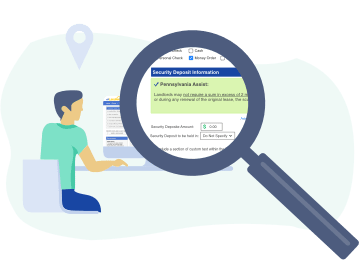
- As you build your Lease, you’ll get California State Assist tips
- We automatically include any specific language or terms required in California
- We automatically include any California required disclosure or addenda
Watch Our Playlist
We Provide the Highest Quality California Lease Available Online
You won’t find a better Lease Agreement online than the California ezProLease.
- A Lease Agreement that leverages the expertise of thousands of Landlords
- Recommended by Shark Tank's Barbara Corcoran
- Over 3 million Leases created since 2006
- Rated "excellent" 4.8 from 5,000+ reviews


California Landlord-Tenant Laws 2026
The state of California has some of the most comprehensive Landlord-Tenant laws in the country.
But we make it EZ for any California Landlord to build a great Lease. When you create your California Lease, we automatically include all state-required language, disclosures, and addenda.
That said, as a Pro Landlord, we know that you want to be familiar with the Landlord-Tenant Laws of the state. So, here’s an overview of key California Landlord-Tenant Laws:
| Category | State Law |
|---|---|
| Ending and Renewing |
Month to Month: A 30-day advance written notice is required for leases that are month to month
and/or under 1 year.
Leases for 1 Year or More: 60 days advance written notice is required, subject to new California Tenant Protection (AB 1482) restrictions |
| Security Deposit | For most landlords, the security deposit may not exceed one month’s rent, regardless of whether the unit is furnished or unfurnished. Landlords who qualify as “small landlords” may charge up to two months rent. To qualify for the small landlord exemption, the landlord must be a natural person or LLC whose members are natural persons and own no more than two residential properties with no more than four units. |
| Returned Payment Fee | Assessed charges must not exceed $25 for the first check and a service fee of up to $35 for each subsequent check to that same payee. |
| Late Fee |
Late fees should not exceed a reasonable estimate of costs incurred.
In some communities, late fees are limited by local rent control ordinances. |
| Insurance Requirements | There are no stated regulations regarding the requirement of renter's insurance in California. |
| Addenda & Disclosures |
Owner/agent must include current and clear notification of the name, telephone number, and street
address of whoever is accepting rental payments, repair requests, and all notices.
Owner/Agent MUST provide a copy of the rental agreement or lease to the tenant within 15 days of its execution by the tenant. Many required addenda included with the lease builder. |
| Notice to Enter | Reasonable prior notice is required. A twenty-four hour written notice to the tenant is considered a reasonable notice. |
| Landlord Requirements |
PROPERTIES IN FORECLOSURE
Month to Month: If a tenant is in possession of the leased premises at the time the property is foreclosed, the landlord must give the tenant a 90-day written notice to terminate under California law. Fixed Term Leases: The tenant may remain until the end of the lease term in most circumstances and all rights and obligations under the lease shall survive foreclosure, including the tenant’s obligation to pay rent. ALTHOUGH, the landlord may give a 90-day written notice to terminate a fixed-term lease after foreclosure should any of the following four situations occur (1) The purchaser or successor-in-interest will occupy the leased premises as their primary residence; (2) The tenant is the borrower or the borrower’s child, spouse, or parent; (3) The lease was not the result of an arms’ length transaction, meaning neither of the involved parties may have any interest in the transaction's consequences to the other party. (4) The lease requires rent that is substantially below fair market rent (except if under rent control or government subsidy). PLEASE NOTE: The purchaser or successor-in-interest possesses the burden of proving that one of these four exceptions has been met. IMPORTANT: This law does not apply if a borrower stays in the property as a tenant, subtenant, or occupant, or if the property is subject to just cause rent control. |
Pro Tip: It’s helpful to review the Guide to Residential Tenants’ and Landlords’ Rights and Responsibilities. It covers all state-required rules and regulations that California Landlords need to know. Review it here.
California Required Disclosures
Our CA Lease Agreement automatically includes all California required language, disclosures, and addenda. That means you don’t have to worry about required disclosures. We’ve already done all of the work.
California law requires that certain disclosures be included in Residential Rental Agreements, including:
- A Lead-Based Paint Disclosure: Required if the property was built prior to 1978.
- AB 1482 Just Cause Addendum: Must be attached and signed by Tenants and Landlords unless the property falls into one of the exemption categories. CIV § 1946.2(e) and § 1947.12(d)(5)(B)(i).
- Demolition: If a Landlord has received any type of permit to demolish a rental, it must be disclosed before accepting the security deposit or signing the Rental Agreement. CIV § 1940.6.
- Flood disclosure: The Landlord is required to inform the Tenant if the property is located in any special flood area. AB-646.
- Mold disclosure: California law requires that a Landlord disclose the health risks associated with mold by attaching a Mold Disclosure to the Agreement. Health and Safety Code § 26147 & § 26148.
- Smoking Policy Disclosure: Landlords must state if smoking is tolerated and the areas where it’s allowed, including any common areas. CIV § 1947.5.
- Bed Bug Addendum: Landlords must provide specific information about bed bugs, preventing them, and reporting suspected infestations; Landlords are also required to provide documentation from a pest control company showing that there’s no existence of bed bugs in the unit. CIV § 1942.5(a)(1).
- Pest Control: If remediation has been conducted on the rental, a copy of the inspection report from the pest control company must be forwarded to the new Tenant. GOV CODE § 1099.
- Shared utilities: If the property or apartment has shared utilities, the Agreement must explain how the utilities will be split. CIV § 1940.9.
- Megan’s Law: New Tenants must be notified in writing that the California Department of Justice operates a website that shares reports concerning registered sex offenders. CIV § 2079.10a.
- Death: If a death has occurred in the unit in the past three (3) years, the Landlord must notify the new Tenant. CIV § 1710.2.
Take the quiz: What clauses would you include to prevent Tenant Nightmares?
CA Optional Disclosures
There are some optional disclosures that Landlords can choose to add to their Lease. This is as EZ as clicking a box to add the disclosures you want to your Lease Package.
- Asbestos Disclosure: If the unit contains or may contain asbestos, this form should be added to the Lease.
- Grilling Addendum: Provides the rules and policies governing grilling on the premises.
- Pet Addendum: To provide guidelines and policies when a Tenant has a pet on the premises.
- Pool and Hot Tub Addendum: If a hot tub, jacuzzi, or pool are on the property, this form should be used.
- Renter’s Insurance Addendum: This should be used if renter’s insurance is required
- Satellite Dish Addendum: In California, all Tenants have the right to install a satellite dish as long as it conforms with all state and local laws.
- Criminal Activity Addendum: Neither Tenants nor their guests may engage in any of the activities listed in this document - see a sample here for a list of activities. Failure to comply may result in immediate removal (eviction) from the property.
Pro Tip: Our State Assist automatically includes all state-required language and documents.
When is Rent Due & Late Fees
- Rent is due on the day specified in the California Lease Agreement.
- Rent can be paid as specified in the Lease, for example, with check, cash, electronically, Venmo, etc.
- There is no state-required "grace period"
- Late fees:There is no specified amount for late fees, but the fee should not exceed a reasonable estimate of the costs incurred due to the late payment. Note: in some places, late fees are limited by local rent control ordinances.
- Notice to Quit: If renters are late paying rent, Landlords may send a 3-day Notice to Quit, which requires them to pay the full amount due or vacate the property. If they do neither, Landlords may initiate eviction proceedings. See sample form here.
City and County Ordinances
In addition to state laws, California Landlords also have to comply with the city and county regulations where their apartments, single-family homes, condos, duplex, or other types of rental units are located.
Here are just a few examples of local ordinances you need to know:
- In San Diego, a Landlord must give "just cause" when serving a sixty (60) day notice
- Landlords in Long Beach must register their rentals with the City’s Proactive Rental Housing Inspection Program
- In Beverly Hills, a Landlord may increase rent once every 12 months, limited to 3% of the current rent or the regional Consumer Price Index (CPI), whichever is higher
- Sacramento’s Tenant Protection Ordinance limits the amount rent can be increased annually and prohibits evictions without just cause
- Los Angeles Landlords should review the Los Angeles Landlord and Tenant Handbook for Rent Stabilized Units, which can be found here
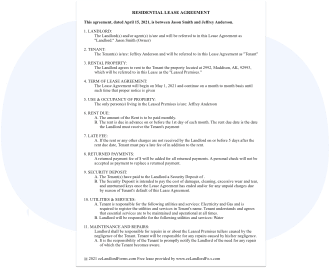
We’re proud that our thorough California Residential Lease Agreement meets all of the requirements for the cities of:
| Anaheim | Los Angeles | San Diego | San Francisco |
| Bakersfield | Long Beach | Santa Ana | San Jose |
| Fresno | Riverside | Sacramento | Stockton |

Frequently Asked Questions (FAQs)
What is a California Lease Agreement?
A California Lease Agreement is a legally binding document between a Landlord (the lessor) and a Tenant (the
lessee) that outlines all of the terms of a rental relationship. It provides all rules, policies, and terms
under which a Tenant rents property from a Landlord. Upon signing the Lease Agreement, the Tenant generally pays
a security deposit and the first month’s rent.
Who Needs a California Lease Agreement?
Anyone who rents real estate needs a California Residential Lease Agreement, whether they’re renting residential
or commercial real estate. This is true even if you’re renting to a friend or a family member.
What are the Different Types of California Lease Agreements?
At ezLandlordForms, we offer several California lease options to fit any landlord's needs: Month-to-Month Rental Agreement for flexible terms, a free Simple Rental Agreement , a state-specific Residential Lease Agreement, a Commercial Lease Agreement for non-residential property, and a Sublease Agreement for tenants subletting a unit.
How much can a landlord charge for a security deposit in California?
Under California's AB 12, effective July 1, 2024, a security deposit may not exceed one month's rent, whether the unit is furnished or unfurnished. A small landlord who is a natural person or LLC owning no more than two properties with four units total may charge up to two months. For military service members, the limit is always one month.
What disclosures are required in a California lease agreement?
California requires several disclosures depending on the property. Common ones include lead-based paint (for pre-1978 homes), the AB 1482 just cause addendum, mold, bed bugs, flood risk, Megan's Law notice, shared utilities, demolition permits, and any death in the unit within the past three years. ezLandlordForms automatically includes the required California disclosures and addenda when you build the lease.
How long does a California landlord have to return a security deposit?
California law gives a landlord 21 calendar days after the tenant moves out to either return the full deposit or mail an itemized statement listing any deductions, with reasons, along with any remaining balance. A deposit can never be labeled nonrefundable, and landlords must offer a pre-move-out inspection so tenants can fix issues before deductions.
What is the AB 1482 Just Cause Addendum?
AB 1482, the California Tenant Protection Act, caps annual rent increases for covered properties and requires a stated just cause to end most tenancies. The AB 1482 addendum must be attached and signed unless the property is exempt, in which case a notice of exemption is used instead. The ezLandlordForms builder includes this addendum automatically when it applies.
Can I charge a larger deposit for a furnished rental in California?
No. Before AB 12, landlords could charge up to three months' rent for furnished units and two months for unfurnished. As of July 1, 2024, the cap is one month's rent regardless of whether the unit is furnished, with a limited two-month exception for qualifying small landlords. The same one-month rule covers pet and other prepaid deposits combined.
Does a California lease agreement need to be notarized?
No. A California residential lease must be signed by both the landlord and the tenant, but it does not need to be notarized to be legally binding. The ezLandlordForms ezSign tool lets both parties sign electronically from a phone or computer, and the signed lease is stored securely and available to download as a PDF.
Is the ezLandlordForms California lease agreement free?
You can build and preview the California lease for free to see exactly what it includes. To download, print, or send it for electronic signature with ezSign, you create a Pro account. The builder adds California State Assist tips and automatically includes the state-required language, disclosures, and addenda as you go.
What should be included in a California lease agreement?
A complete California lease should include the landlord, tenant, and occupant names and contact details, a property description, the tenancy term, rent amount and due dates, and security deposit terms within the AB 12 limit. It also needs California-specific language and all required disclosures and addenda, plus custom rules for pets, guests, parking, and utilities.
Can I Write My Own California Lease Agreement?
In theory, you can write your own Agreement, but it’s risky to do so. Your Lease needs to comply with all
California Lease laws and cover all terms and policies of your rental property. If there’s any conflict with a
Tenant or any issues with a property, it’s the Lease that will protect you.
The Lease is the most important document that Landlords use, so it’s critical that you have a great one that complies with all legal requirements and covers all terms of your rental relationship.
Other Popular Forms
While we have the best online Lease available, that’s not all that we offer Landlords. We also have thorough Tenant Screening Services and all the forms you need for the entire Landlord Lifecycle. Soup to nuts Landlord tools, if you will.
- Rental Application: Pro Landlord tip - never hand over possession of your rental property without first having an Applicant complete a Rental Application and Tenant Screening. Thorough Tenant Screening should always include a credit report and criminal background report.
- Move-In/Move-Out Walkthrough Checklist: Use this checklist to keep track of the condition of your property and to make sure that you account for any damage caused by Tenants.
- Tenant Welcome Letter: Customize this welcome letter to provide Tenants with all the information they need about their new home from day one. Pro Landlord tip - good communication is key for a good Landlord-Tenant relationship. The Welcome Letter is a great way to make sure you have good communication from day 1.
- Rent Ledger: This form provides an EZ way for Landlords to document rent payments and ensure that all Tenants are current on rent.
California State Specific Documents
- California Security Deposit Accounting Statement: This form makes it EZ for Landlords to comply with California’s specific requirements regarding the accounting of security deposits.
- California 30-Day Notice to Vacate: This is the form Landlords need to end a month-to-month Lease or a Lease with a tenancy period of less than one year.
- California 60-Day Notice to Vacate for Non-Exempt Properties - No-Fault Just Cause Lease Termination: California Landlords can provide Tenants with a 60-day Notice for no-fault just cause evictions, which must inform Tenants of their right to receive relocation assistance.
- California Notification of Pre-Move Out Inspection: California Landlords are required to give Tenants written notification of their right to request a pre-move out inspection. This form makes it EZ to do!
- California 3-Day Notice to Pay or Quit: This form is for Tenants that are behind on rent and a necessary step prior to filing for eviction.
- California 3-Day Notice to Perform or Quit: If you have a Tenant that is breaking the Lease but the violation can be fixed, this is the form you need.
- California Notice to Reclaim Abandoned Property: If a Tenant leaves unclaimed property in a rental unit that appears to be worth more than $700, this form is required.
- California Notice of Belief of Abandonment: If a Tenant has missed at least 14 days of rent and you believe they have abandoned the property, this notice must be sent to Tenants.
- California Unlawful Detainer Complaint: This is the complaint Landlords use to officially initiate eviction proceedings. This can be used when a Tenant has violated the Lease Agreement and been served proper notice.
- California AB 1482 Rent Control & Eviction Exemption Form: California Landlords must provide Tenants with this Notice of Exemption if their property is exempt from the requirements of California AB 1482. California Accessibility and Americans with Disabilities Act: A landlord should include this form in a commercial lease to state whether or not the premises has been inspected by a Certified Access Specialist.
- California Bed Bug Addendum:California Landlords should include this in their Lease Package to comply with state bed bud disclosure requirements.
- California Death on Premises Disclosure: Use this disclosure to comply with California’s requirement of disclosing any death in the unit in the past three years.
- California Notice of Intent to Demolish: Use this disclosure to provide current and prospective Tenants with adequate notice of intent to demolish a rental unit.
- California Flood Disclosure: This form is an easy way for California Landlords to comply with required statewide flood disclosures and to give Tenants all necessary notice of flood risks.
- California Information of Dampness & Mold: California Landlords must provide Tenants with the informational booklet before entering into a Lease Agreement.
- California Methamphetamine or Fentanyl Disclosure: If a rental unit has been contaminated by methamphetamine or fentanyl or is in remediation, Landlords must disclose this to Tenants and provide them with the remediation order.
- California Ordnance Location Disclosure: If a Landlord has knowledge that a rental unit is within one mile of a former state or federal ordnance location, this must be disclosed to Tenants in the Lease Agreement.
- California Energy Disclosure: Use this form in a commercial lease to confirm that the energy consumption and benchmarking disclosure were provided to the tenant.
- California Flood Disclosure: This form is an easy way for California Landlords to comply with required statewide flood disclosures and to give Tenants all necessary notice of flood risks.
- California AB 1482: The California Tenant Protection Act requires this document, a written disclosure concerning two requirements: 1. Limits on rent increases and 2. a statement of cause in notices to terminate a tenancy.
- California Water Meter Disclosure: California Landlords that charge Tenants separately for water usage or those required to use water submeters must provide Tenants with a Water Meter Disclosure.
- Information on Dampness and Mold for Renters in California: Information on Dampness and Mold for Renters in California
- 15 Day Notice to Pay or Quit: This form provides the language required for a California Landlord to initiate eviction proceedings pursuant to CA AB 3088, including the required attachment of a Declaration of COVID-19-Related Financial Distress.
- California Guide to Residential Tenants’ And Landlords’ Rights And Responsibilities: This is the California Guide to Residential Tenants' And Landlords' Rights And Responsibilities.
- California Rental Application: This Rental Application will provide the landlord with the necessary information about the inquiring applicants, excluding the marital status question.
- California Family Daycare Q&A for Landlords: An informative guide for the landlord regarding the requirements needed for a tenant to run a home daycare in a rental property.
- California Non-Residential Building Energy Disclosure Program Information: California Landlords who rent non-residential property must comply with the California Nonresidential Building Energy Use Disclosure Program.
- California Notice of Pest Control Treatment: California Landlords are required to give renters notice any time the Landlord uses pesticides to treat a rental unit. Ours is EZ to customize & download.
- California Quitclaim Deed: This California Quitclaim Deed complies with California's legal requirements and allows owners to transfer their housing ownership to others.
- Declaration of COVID-19-Related Financial Distress: This form provides the language required for a California Landlord to initiate eviction proceedings pursuant to CA AB 3088, including the required attachment of a Declaration of COVID-19-Related Financial Distress.
Lease Agreements for Neighboring States
We know that lots of CA Landlords own rental units in nearby states. That’s why we offer state-specific Leases for every state that are guaranteed to comply with state law.
- Arizona Rental Contract: Includes all Arizona required language!
- Idaho Residential Lease Agreement: Customize this Lease and add any additional forms you need. Note: we also have short-term rental contracts for vacation homes, which are popular for many Idaho Landlords.
- Lease Agreement Nevada: Customize your Nevada Lease to create the complete Lease Package.
- Oregon Lease Contract: The Oregon Lease includes all required disclosures, including carbon monoxide and flood plain disclosures.
- UT Lease Agreement: The EZiest way to build a comprehensive Utah Lease!
- Washington Rental Lease Agreement: Like all of our state-specific Leases, our Washington Lease gives Landlords unlimited access to our electronic signing tool, ezSign.
Things to Consider Before You Hand Over Legal Possession of Your CA Property
- Have all Tenants completed a Rental Application and Tenant Screening?
- Do you have a fully executed Lease Agreement?
- Have you received the entire security deposit and first month’s rent?
Other Tools CA Landlords Love!

Unlimited access to our electronic signature tool, ezSign. With this user-friendly tool, Landlords and Tenants only need a smartphone or a computer to sign their Lease.

Your Lease is automatically stored securely on encrypted servers with ezCloudStorage. BUT, we know some Landlords like a hard copy, so it’s also printable and EZ to save as a PDF.